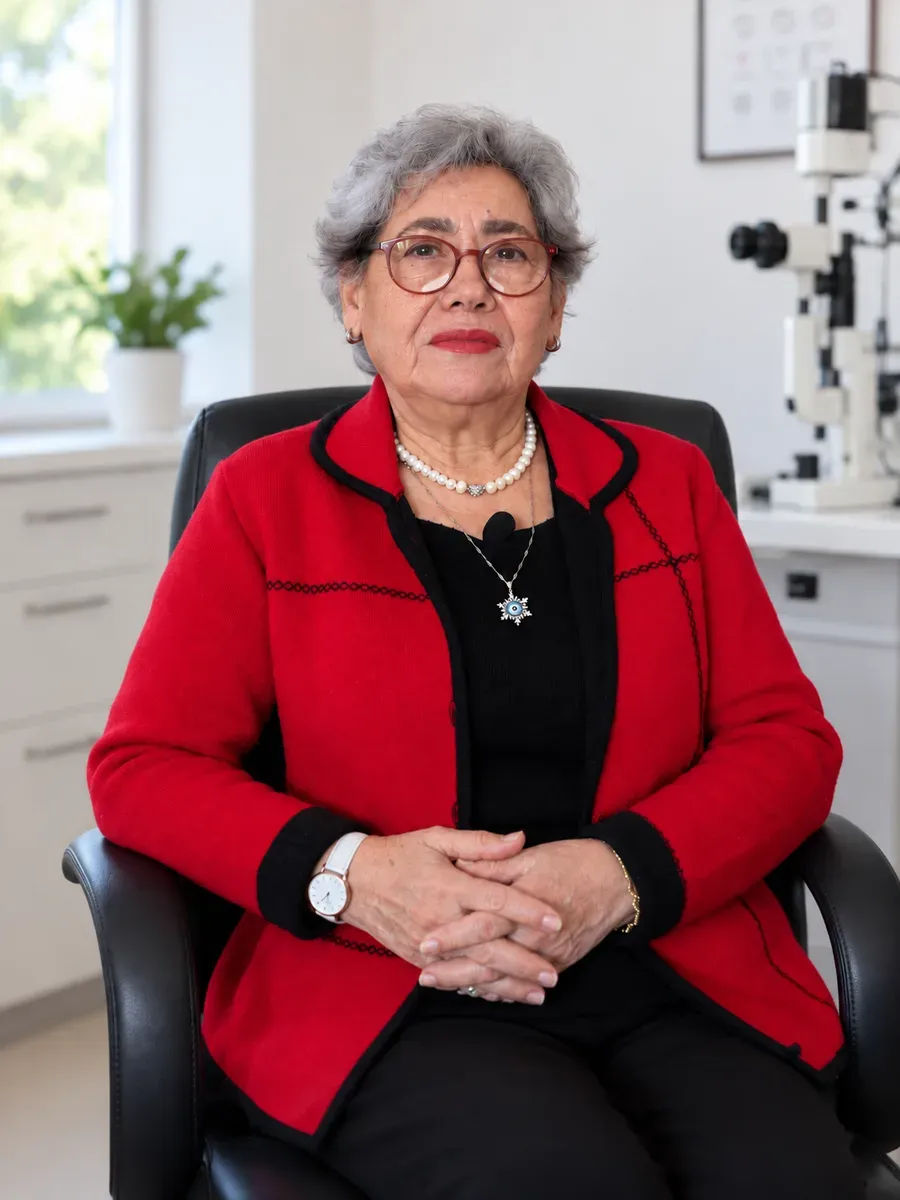
A writer and painter on living with macular degeneration, the injections that followed, and the small test she set herself.
In their own words
Read the transcript
Macular degeneration became an illness that rather darkened my life, but it was Dr. Çağatay who diagnosed it. We started with the dry form. With his guidance, I kept it in check — taking my vitamins on schedule and following a Mediterranean diet.
But then a moment came, and it happened all at once. Dark patches appeared in my left eye. The wet form of macular degeneration is, of course, more dangerous. It had to be treated with injections.
Now, writing is a part of my life. I'm at the computer constantly. And I've been painting for 50 years. I was heartbroken at the thought of having to give all that up. But when my doctor told me never to stop painting, I was overjoyed.
By great good fortune, my doctor, Çağatay Çağlar, came to Istanbul. That was wonderful for me, of course. My doctor is an outstanding one, and a true specialist in this field.
I'm so glad that we seem to have stopped it from progressing. I try not to lose my hold on life. I do my painting. I've set myself a little benchmark — when I can thread a needle, I tell myself my eyes are fine.
A diagnosis that darkened things
Macular degeneration, she says, became an illness that rather darkened her life. It was Dr. Çağatay who diagnosed it.
They began with the dry form, and for a while she held it steady the way that form is held steady: vitamins taken on schedule, a Mediterranean diet, and regular guidance about both.
When it changed
Then it changed, and it changed all at once. Dark patches appeared in her left eye. The wet form is the more dangerous one, and it had to be treated with injections.
Why it mattered so much
Writing is part of her life — she is at the computer constantly — and she has been painting for fifty years. The prospect of giving that up is the part she describes as heartbreaking, more than the diagnosis itself.
What she remembers is being told never to stop painting.
Her own benchmark
She is glad that the progression seems to have been halted, and careful about how she puts it. She keeps painting. And she has set herself a small private test, one that has nothing to do with a chart on a wall: when she can thread a needle, she tells herself her eyes are fine.
When I can thread a needle, I tell myself my eyes are fine.